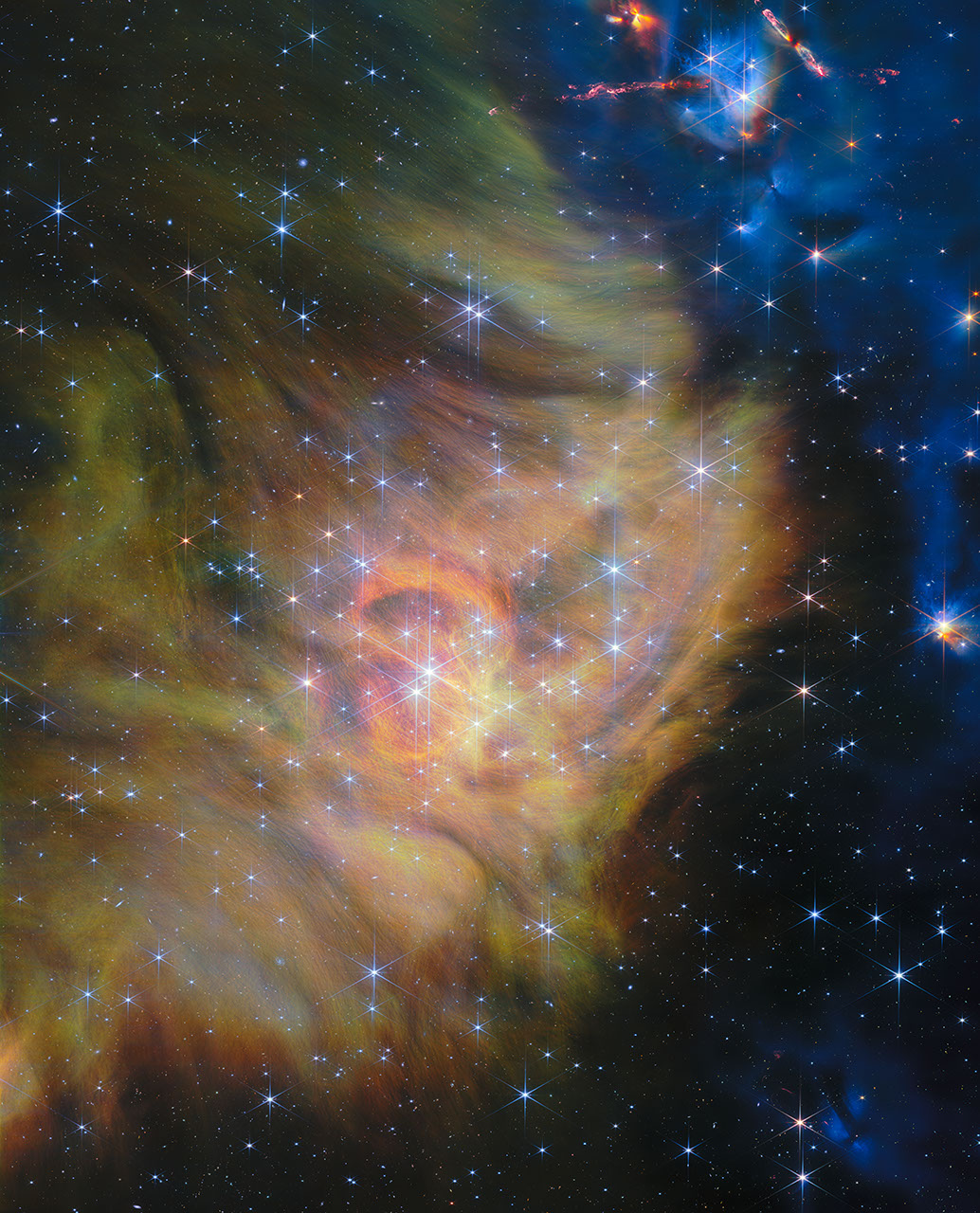
Image (Credit): IC 348 as captured by NASA’s JWST recently observed IC 348. (NASA, ESA, CSA, Kevin Luhman (PSU), Catarina Alves de Oliveira (ESA), Mahdi Zamani (ESA/Webb))
This week’s image is from the James Webb Space Telescope (JWST). With its sharp, amazing colors you would not think it is real, yet you are looking at a star-forming region about 1,000 light-years away called IC 348.
In regions like IC 348, cold clouds of molecular hydrogen gas collapse to form new stars, creating glowing, sculpted scenes like this one. The star-formation process can create widely varied objects, from massive stars that expire after only a few million years in core-collapse supernova explosions to the smallest and most common stars, which are long lived and produce powerful stellar storms.The smallest stars weigh in at around 8 percent of the Sun’s mass. Below this mass lies a strange class of objects called brown dwarfs. Brown dwarfs form in the same way stars do, through the collapse of molecular clouds. However, unlike stars, the cores of brown dwarfs never become hot enough to fuse ordinary hydrogen into helium (though many briefly fuse deuterium, or heavy hydrogen, early in their lives).
Image (Credit): The crew from Black Mirror’s USS Callister. (Netflix)
“In Serling’s day, the atom bomb, civil rights, McCarthyism, psychiatry and the space race were of primary concern. Today he’d be writing about terrorism, the economy, the media, privacy and our relationship with technology…That’s what we’re aiming for with Black Mirror: each episode has a different cast, a different setting, even a different reality. But they’re all about the way we live now – and the way we might be living in 10 minutes’ time if we’re clumsy.”
-Statement by Charlie Brooker, creator of the Black Mirror series, as quoted by Collider. Season 8 of the series will premiere on Netflix shortly. The series has been very timely as we deal with new technologies, social media, and now artificial intelligence. You might also recall two earlier episodes with the USS Callister, which was a clever and dark mimicking of Star Trek. Another good episode, called “Beyond the Sea,” also dealt with space travel. Hopefully, we will get a least one more space-related episode out of the new season.
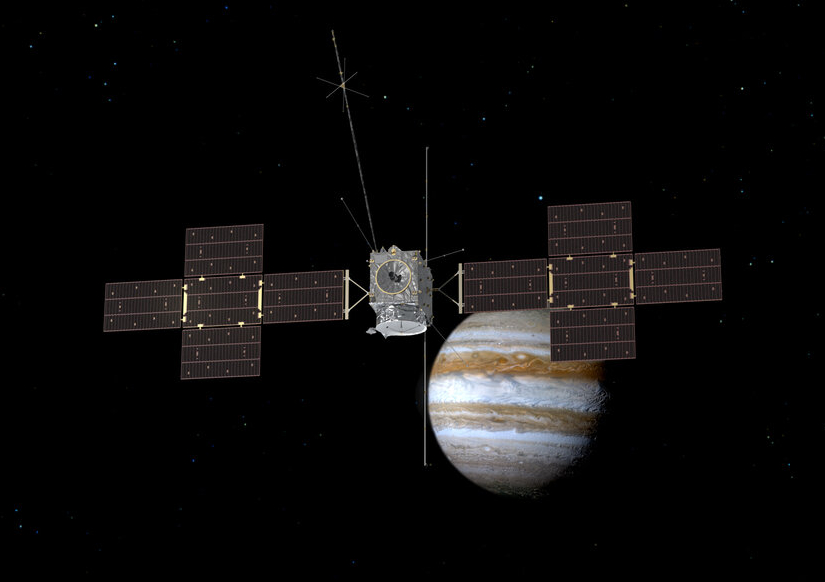
The European Space Agency’s Jupiter Icy Moons Explorer (Juice) skimmed the very outer edge of Earth’s atmosphere on 28 September, using the gravity of our home planet to alter its route to Jupiter using very little fuel. The flyby deflected Juice by an angle of 20° compared to its pre-flyby path and increased its velocity by 3.5 km/s. In the four weeks before the flyby, spacecraft operators only had to give Juice one tiny nudge (out of six opportunities set aside) to put it on exactly the right approach trajectory to make the most of Earth’s gravity. They have been tracking the spacecraft extra carefully since 17 August, and will continue to do so until 10 October.
SpaceX’s massive Starship rocket blasted off from Texas Monday morning on its most ambitious test flight yet, aiming for a roughly 10-hour mission that would have sent the spacecraft around Earth six times, though the company ultimately decided to end the flight earlier than planned…The launch marks Starship’s 14th test flight and its first attempt to reach orbit, a major step beyond previous suborbital missions that ended with splashdowns about an hour after liftoff.
NASA is working with Boeing to launch an unpiloted Starliner capsule in the December-to-January time frame to test upgrades and improvements ordered in the wake of a 2024 mission that suffered multiple propulsion system failures, stranding two astronauts on the space station for more than nine months. If the unpiloted test flight goes well, NASA and Boeing hope to launch a piloted Starliner flight in the mid-2028 time frame, officials said Monday, incorporating redesigned propulsion system valves, more robust subsystems and other modifications expected to prevent the sort of failures that occurred in 2024. Veteran astronaut Warren “Woody” Hoburg will command the mission.
It’s a question that has perplexed planetary astronomers for decades: Why does Venus — so similar in size to Earth and not all that far from Earth’s orbit — have no moon, while our planet has such a relatively large one? Earth’s Moon likely formed after a massive collision early in solar system history. But according to calculations, Venus should have been even more likely than Earth to have experienced such a catastrophic crash during its formative years. Yet today it has no moon at all. Now, a series of simulations published in the September 20th Astrophysical Journal, have demonstrated that Venus might once have had a moon — but the planet’s relative proximity to the Sun and its massive atmosphere both created conditions under which no moon could have survived. If there ever was a moon, it would have disintegrated and fallen back to the surface long ago.
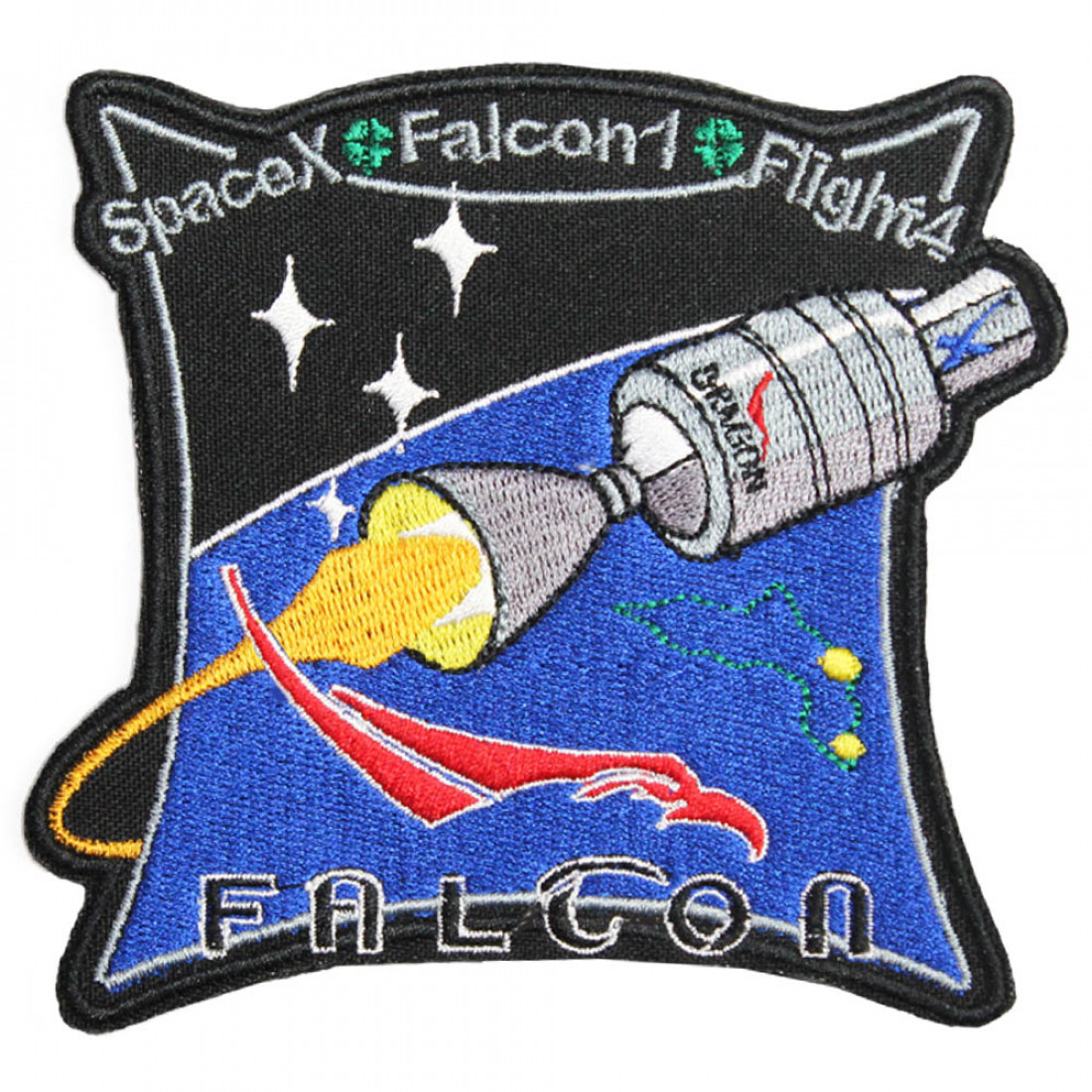
On this day in 2008, SpaceX had a successful launch of its Falcon 1 rocket after three earlier failures. Launched from Omelek Island in the Marshall Islands, the rocket would fly only one more mission before being retired. It was replaced by the Falcon 9, which is still in service today.
After the third failure of the Falcon 1 in August 2008, Elon Musk stated:
The most important message I’d like to send right now is that SpaceX will not skip a beat in execution going forward. We have flight four of Falcon 1 almost ready for flight and flight five right behind that. I have also given the go ahead to begin fabrication of flight six. Falcon 9 development will also continue unabated, taking into account the lessons learned with Falcon 1. We have made great progress this past week with the successful nine engine firing.
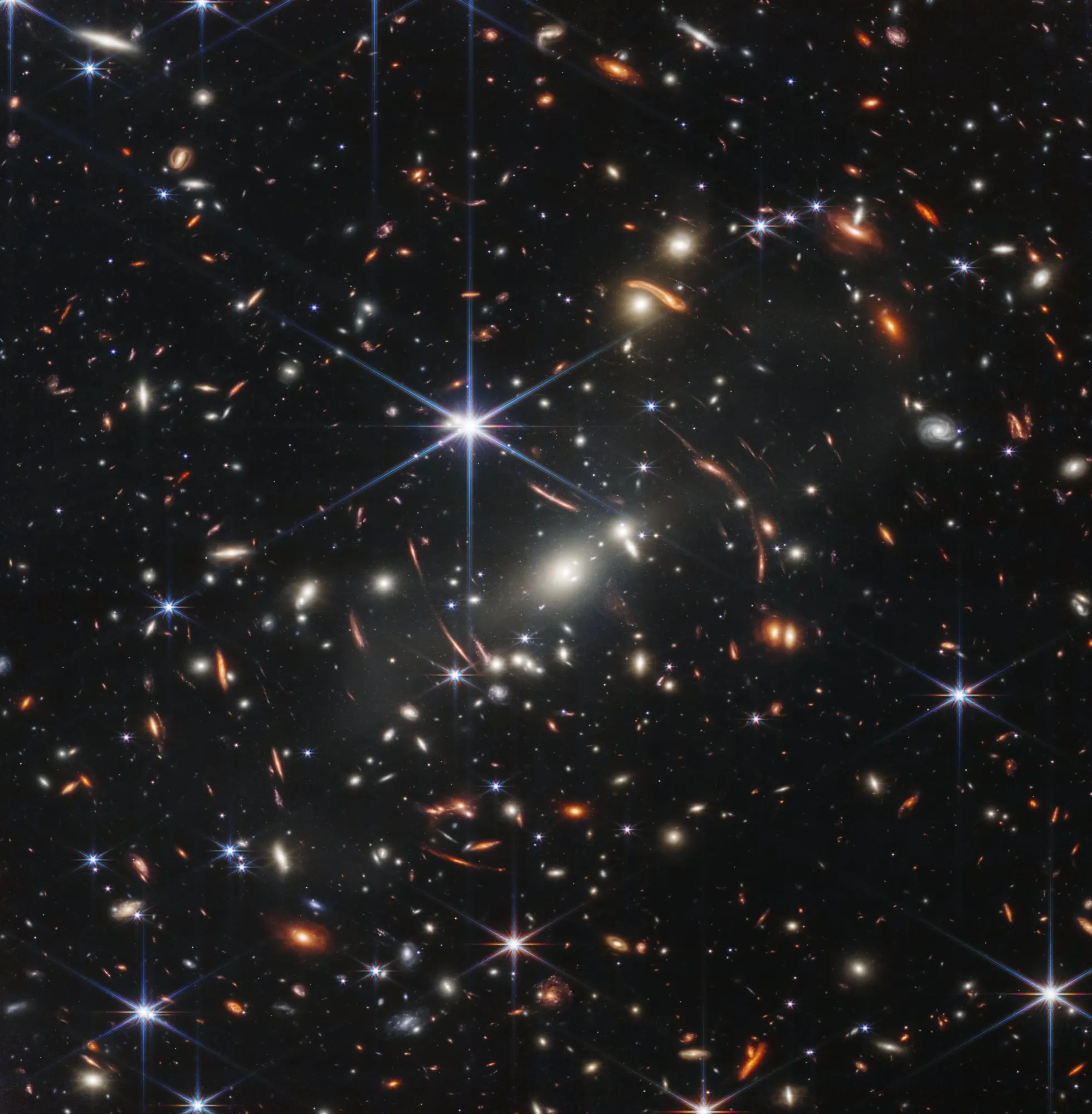
Models predict that chemical enrichment and gas redistribution should begin rapidly once star formation starts, but direct constraints at the earliest epochs have been scarce. Here we show that metal-enriched gas in multiple ionic phases was already present around galaxies before the midpoint of cosmic reionization. Using JWST/NIRSpec rest-frame ultraviolet spectroscopy from SPURS, we detect blueshifted metal absorption in three galaxies at 7.2 < z < 9.3. The detected transitions span neutral, low-ionization and high-ionization species, including O I, Si II, C II, Si IV and C IV, with velocity offsets of ∣Δv∣ ≈ 50–250 km s−1 relative to nebular systemic redshifts. The ionic coexistence, overlapping velocity structure and equivalent-width ratios are consistent with outflowing or otherwise kinematically disturbed galaxy-associated gas, implying rapid metal enrichment. These results show that key conditions for baryon cycling were established in at least a subset of luminous galaxies within the first several hundred million years of cosmic time, well before the completion of reionization.
Citation: Zhu, Y., Ji, Z., Becker, G.D. et al. Early metal-enriched baryon cycling before the midpoint of cosmic reionization. Nat Astron (2026).